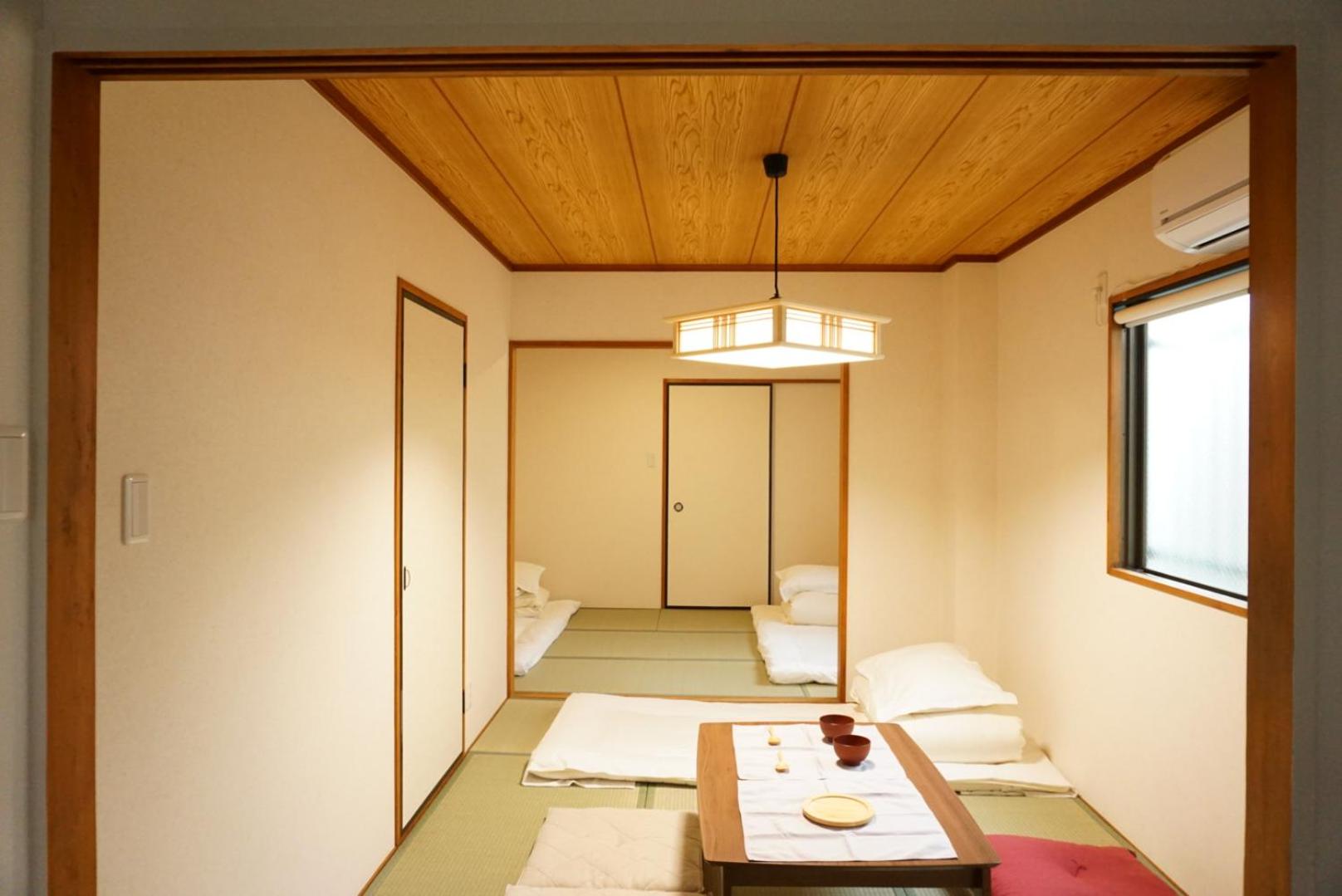
Guest-guided hotel insights
SYOGA A house, next to natural park
Based on public data
This hotel has little guest-verified firsthand data yet. 0 reports; thin data, conclusions stay cautious. High-value questions (upgrades, lounge, breakfast) stay marked insufficient — we label thin data, we never fabricate.
Contribute a stay report06External scores · reference only, not verified
External aggregates never count as verified, and this page never shows a price.
Rooms & Views
Guests will have a special experience as this suite provides a hot tub. The air-conditioned suite features 2 bedrooms an…
The hot tub is the standout feature of this double room. The double room features air conditioning, a washing machine, a…
Guests will have a special experience as this double room provides a hot tub. The double room offers air conditioning, a…
This double room features a hot tub. The double room provides air conditioning, a washing machine, a balcony with a quie…
T2 · Official booking system. Actual features may vary.
Restaurants nearby
- Tenjimbashi Aoki★★ Michelin Scrupulous attention is paid to the ceremonial space, cuisine, serving vessels and sense of the seasons. The chef learned his guiding principles at a restaurant in Hozenji Alley. Entrusted with preparing the appetiser platters, he became schooled in the knowledge and aesthetics of Japanese cuisine. Aiming for artistic beauty in all aspects, he grows his own flowers to decorate the sukiya interior and collects seasonal serving vessels to delight guests. Technique, experience and sensibility all merge to create assortments of dishes that celebrate the seasons and their festivals.1.8km
- Higashichaya Nakamura★ Michelin The star of the menu is the bounty of the Hokuriku region. Seafood is delivered from the chef’s native Ishikawa Prefecture; seafood from every part of Ishikawa express the shifting seasons: Noto abalone, Nanao egg cockles, Chirihama oysters, and Kanaiwa male snow crab. As he cooks on an earthen charcoal brazier, the chef holds forth on their particular qualities and the passion of the fishermen with whom he does business. The restaurant name derives from the historic Higashi Chaya district of Kanazawa. From behind the counter, the chef waxes eloquent on the charms of his birthplace.1.6km
- Ukitacho Ima★ Michelin The chef spent years fine-tuning his skills in a Japanese restaurant in Hozenji Yokocho. While treasuring the lessons he learned there, he now blazes his own culinary trail. Mindful of how knife technique can affect the flavour of sashimi, he practises daily and his grounded approach to cooking is reassuring to watch. Bringing together everything he has learned over his career, he expresses it in cuisine of the ‘here and now’. Rather than just copy his mentor, the chef treads his own path in the gastronomic world.1.9km
- Pierre★ Michelin Freshness is number one with the chef of Pierre, so he focuses on ingredients grown and raised in Japan. The menu only lists the ingredients, encouraging guests to give their imaginations free rein. Japanese seasonings such as mustard and chilli peppers mixed with yuzu zest lend a distinctive accent. French cooking techniques are married with Japanese ingredients, which are then prepared with a light touch. Spellbinding views from the spacious dining room high in a tall building add to the ambience.1.9km
- Kamigatachuka SHINTANI★ Michelin Weave Kansai food culture and Chinese tradition together and you get Kamigatachuka. Ingredients from the Kinki region are prepared using Chinese and Japanese techniques; continuing the theme, items are served on Chinese and Japanese plates and bowls. Vegetarian cuisine, dubbed ‘Naniwa’ (‘vegetable garden’), brings to mind the Kawachi Plain’s fame as a vegetable-producing region. The fare is the self-expression of a chef who was born in Osaka and grew up in a family that ran a Chinese restaurant.2.1km
- Yonemasu★ Michelin The menus are focused on words associated with the traditional calendar; ingredients are plotted on a map of Japan to show which items come from where. The proprietor and his cooks begin by introducing the ingredients then work as a team to prepare the meal, presenting freshly cooked aromas and flavours. Strict attention is paid to temperature and texture. The choice of serving vessels and presenting food on paper or leaf garnishes convey hallowed customs in Japanese cuisine. The flavours of the season are savoured with the calendar never far from your mind.2.4km
- Numata★★ Michelin The tempura fried by the chef as his heart dictates comes out refined. To bring the flavour of carefully selected ingredients, the main oil of choice is Taihaku sesame oil. The coating is infused with bubbles, giving it a light texture. In a distinctive presentation style, seafood and vegetables that work well together are served in alternating pairs. The final dish is the guest’s choice of tendon, tempura over rice; tencha, tendon steeped in roasted green tea; or tenmusu, onigiri filled with shrimp tempura. The chef does not neglect training the next generation, either, entrusting understudie2.8km
- KAHALA★★ Michelin Over half a century since he opened his restaurant, Yoshifumi Mori remains vigorously engaged in food preparation. His passion seems unquenchable: with rice flour and salt, he created a seasoning that melts away like snow. He makes wine and even grows rice. Scouring every region of Japan, the chef seeks out unknown ingredients and introduces them to the world. All this has led to Mori being honoured by the Ministry of Agriculture, Forestry and Fisheries. Like a steel plate polished until gleaming, he continues to sharpen his culinary sensibilities.2.9km
- Mugito MensukeBib Queues form daily in front of this popular restaurant. The earthen wall made by a plasterer and counter seating with wooden trays are typical of neighbourhood Japanese restaurants. The dish that brings in many diners is the soy-sauce ramen made with chicken broth; the heart of its flavour is the mixture of guinea fowl and free-range chicken, raised together by a farmer who shares the chef’s vision. The flavours of the two fowl are layered within the clear, amber-coloured soup. House-made noodles, crafted for a satisfying finish, balance and support the character of the bowl.1.4km
- Oimatsu Hisano★★ Michelin The chef interprets the seasons through kaiseki, adding twists and tricks that make the cuisine his own. To express each season, appetisers are accompanied by leaves collected on hill and dale and a slim strip of paper is inscribed with a seasonal phrase. White rice, cooked in clay pots, is specially selected and treated. Rice grown in serpentinite soil, with its rich mineral content, is seasoned with salt and soy sauce to bring out umami and flavour. In a unique touch, scorched rice is served like a rice cracker. The basics of Japanese cuisine are safely guarded, yet imagination has room to r3.0km
Includes Michelin / Black Pearl / guide picks (reference quality, no prices); data from Overture, Michelin Guide and others.
Attractions nearby
- Osaka Castle Japanese castle in Chūō-ku, Osaka, Japan4.9km
- Museum of Oriental Ceramics, Osaka art museum in Osaka, Japan3.4km
- National Museum of Art, Osaka museum in Japan3.5km
- Ōsaka Tenmangū Shinto shrine in Osaka Prefecture, Japan3.4km
- Osaka Science Museum science museum3.6km
- Ishiyama Hongan-ji historical Buddhist temple located in Osaka, Japan4.8km
- Osaka Castle Park park4.9km
Attraction data from Wikidata (CC0) — reference only.
Related community discussion
Start a discussionCommunity posts are member discussion. They are not used as verified records until separately reviewed.
No related posts yet
Start the first public discussion for this hotel or its program.