suikakan heianjingumae
·Hotels
No accessible shuttleAccessible shuttleFront desk (limited hours)Housekeeping on requestWheelchair accessible
04
Guest scores & sentiment
From — guest reviews · multi-source
Dimension scores · cross-source
Service9.4
Facilities9.4
Cleanliness9.4
Surroundings9.4
Guest reports describe individual stays. Confirm important facilities, benefits and arrival arrangements with the hotel.
Book on FlyerTrip →R
Room types · 1
Room photos, bedding & descriptions; live rates & booking live on FlyerTrip (no checkout here).
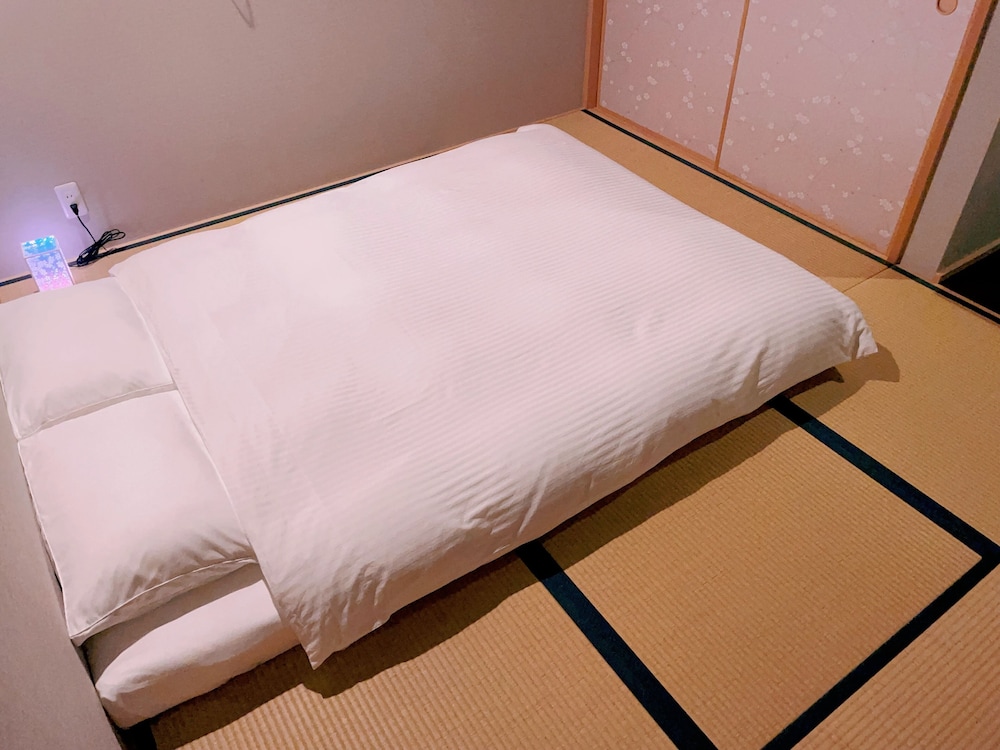
Romantic Triple Room
1 × Futon Mat / 1 × Futon Matup to 3
<p><strong>1 Double Futon and 1 Twin Futon</strong></p><p><b>Internet</b> - Free WiFi 25+ Mbps </p><p><b>Bathroom</b> - Private bathroom, slippers, free toiletries, and a hair dryer</p><p><b>Practical</b> - Wardrobe or closet</p><p><b>Comfort</b> - Air conditioning</p><p><b>Need to Know</b> - Housekeeping on request, no cribs (infant beds) or rollaway/extra beds available</p><p>Non-Smoking</p>
Rates / book on FlyerTrip →F
Facilities · 5
All facilities & services listed by the hotel (aggregated across sources).
No accessible shuttleAccessible shuttleFront desk (limited hours)Housekeeping on requestWheelchair accessible
N
Nearby & map
DiningSights
1
Isshisoden Nakamura
Japanese · ★★★ Michelin
¥¥¥¥
The house began life as a travelling fishmonger, carrying fish from Wakasa Bay to scattered markets, then gradually transitioned into a restaurant. The sixth-generation head, Motokazu Nakamura, took over the reins having been the only one entrusted with the craft he learned at his father’s side. For the white miso zoni, he only uses water drawn from a well on the premises to dissolve the miso. Sake-grilled tilefish is doused in sake multiple times, piling flavour on top of flavour. The chef tends the kitchen with his son, who trained abroad, passing skills and spirit from one generation to the
1.1km
2
Sokkon Fujimoto
Japanese · ★ Michelin
¥¥¥¥
To improve himself, the chef strives to master the arts of tea ceremony, flower arrangement and calligraphy. Those traditional arts and forms are represented by the ideal of ‘shin-gyo-so’—formal, semi-cursive and cursive forms of writing, the first being the most orthodox and the last being the freest, with semi-cursive in between. The principle of shin-gyo-so is to preserve the essentials while giving rein to imagination. The chef follows another credo, the Zen principle of ‘sokkon’, or savouring the moment and banishing worldly thoughts. The chef pays attention to every detail, from cuisine
590m
3
Gokomachi Tagawa
Japanese · ★ Michelin
¥¥¥¥
The chef is dedicated to bringing the natural flavours of his ingredients to life, and his char-grilling technique embodies that approach. Fresh from the kitchen brazier wafts aromas of wagyu beef and eel patiently grilled over bincho charcoal, bearing witness to the chef’s finesse. The meal concludes with a remarkable trio of clay-pot rices—plain, mountain delicacies, and seafood. Enjoy flavours of the season to your heart’s content.
637m
4
Nijo Minami
Japanese · ★ Michelin
¥¥¥
The counter was lacquered by the couple who run the restaurant as a wish for its enduring prosperity. The sign is a memento handwritten for them by the monk of Daitokuji Temple, to which the couple regularly journey to draw water. To impart the flavour of each ingredient, the chef follows a creed of simple, honest preparation. His talents are on full display in the Kyoto cuisine he studied so diligently. The meal closes with handmade Japanese confectioneries. As a devotee of the Omote Senke school of tea ceremony, the chef serves thin tea, which he prepares himself as a token of gratitude.
668m
5
cenci
Italian · ★ Michelin
¥¥¥
Ken Sakamoto exults in expressing Italian cuisine through the bounty of Japanese produce. Putting kombu kelp, bonito stock and fermented ingredients like malted rice miso and sake lees to effective use is how he preaches the gospel of Japanese cuisine. Cured hams and cheeses arrive from producers who share the chef’s passion. Nonstandard vegetables are used in fermented form; pruned citrus fruits garnish lend a sour piquancy as garnish. Food that brings people together in every sense.
737m
6
Tsujifusa
Japanese · ★ Michelin
¥¥¥
Fusa means ‘linen’ or ‘hemp cloth’, which is used in Shinto rituals to symbolise cleanliness. The word was chosen for the restaurant’s name because, like Japanese cuisine, it developed from an origin as a sacred offering, and indeed the shop curtain hanging at the shop’s entrance is woven of pure linen. As part of his daily duties, the owner-chef prays at Ujiko Shrine and draws pure votive water from there. The proprietress, a qualified sommelier, suggests pairings of sake and wine.
873m
7
Kiyama
Japanese · ★ Michelin
¥¥¥¥
Water drawn from a well on the premises is where everything starts for Kiyama. Prix fixe dining begins with the service of plain hot water. The first infusion of dashi is prepared before the guests’ eyes, its aromatic fragrance and clear, refined flavour enlivening each simmered bowl. As the meal draws to a close, the proprietor himself prepares and serves thin tea, a weak matcha. The menu is a hymn of thanks for the pure groundwater of Kyoto that brings out the best in each dish.
875m
8
Hyotei
Japanese · ★★★ Michelin
¥¥¥¥
The aesthetic of ‘wabi-sabi’, restraint and impermanence, breathes in the walls of this veteran ryotei. The garden of moss-covered stone lanterns and washbasins, channels flowing with clear streams from Lake Biwa and a still, quiet tea arbour all give it a shadowed atmosphere. Hyotei eggs are a tradition handed down through generations from the founder. Eiichi Takahashi changed the dashi from dried bonito to dried tuna; tomato and soy sauce gracing Akashi sea bream sashimi is a permutation courtesy of the current chef, Yoshihiro Takahashi. Over the years, layers of innovation build up to cater
1.5km
1
2
3
4
5
6
7
8
Click a row to locate it · distances are approximate. Data from Overture / Michelin / Wikidata.